
1968 Chevy Camaro Specs and Overview
Last Updated October 2, 2025The 1968 Camaro carried the momentum of its breakout debut year and introduced a range of subtle but meaningful upgrades. It retained the same basic shape and performance philosophy but brought refinements that improved drivability, safety, and styling. With more powerful engine options, expanded factory packages, and mid-cycle revisions, the 1968 Camaro carved out its own identity in the first-generation lineup. This article covers the technical specs, year-specific changes, and why it's a favorite among classic car builders and collectors.
1968 Chevy Camaro Specs and Technical Overview
Check out the table below for a quick rundown of the 1968 Chevy Camaro's specs.
| Category | Details |
|---|---|
| Model Year | 1968 (Second year of first-gen Camaro) |
| Engine Options |
230ci Inline-6 (140 hp) 250ci Inline-6 (155 hp) 302ci V8 (290 hp) 307ci V8 (200 hp, new for '68) 327ci V8 (210-275 hp) 350ci V8 (295-300 hp) 396ci V8 (325-375 hp) |
| Transmission Options | 3-speed manual, 4-speed manual, 2-speed Powerglide, 3-speed Turbo Hydra-Matic |
| Horsepower Range | 140hp-375hp |
| Suspension | Independent front, mono-leaf rear springs |
| Brakes | Drum brakes standard; front disc optional |
| Performance Packages | RS, SS, Z/28, RS/SS |
| Wheelbase | 108 inches |
| Weight | Approximately 3,000-3,500 lbs depending on trim |
New Features for the 1968 Model Year
While the 1968 Camaro may have looked similar to its predecessor at first glance, it introduced a series of refinements that elevated both form and function. From safety improvements to subtle styling updates and fresh performance tweaks, the second-year Camaro sharpened its identity without reinventing the formula.
Exterior Updates
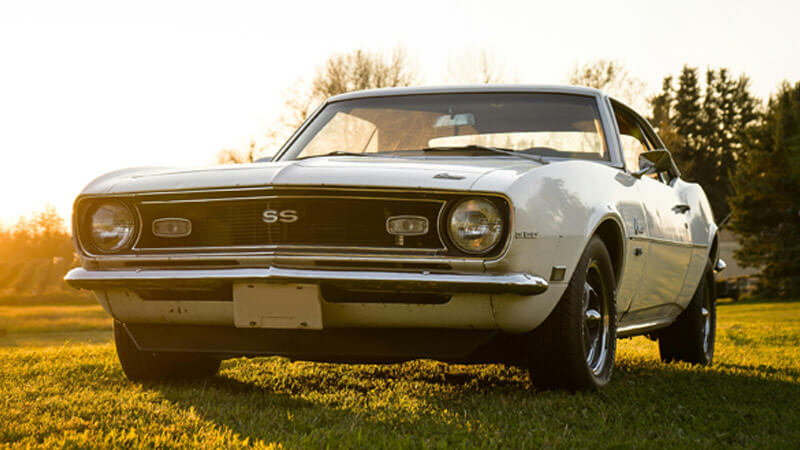
Although visually similar to the '67, the 1968 Camaro received cleaner body lines thanks to the elimination of side vent windows. In their place were larger, single-piece side windows for a more streamlined look. Side marker lights were also added to comply with new federal safety regulations. The RS package continued to offer hidden headlights and unique trim, while the SS package remained focused on performance styling, including hood vents and striping. Minor grille and taillight tweaks subtly refined the overall appearance without departing from the original design.
Interior Improvements
Inside, the 1968 Camaro introduced a number of comfort and safety improvements. A new energy-absorbing steering column and revised instrument panel met federal crash safety standards. New optional features like shoulder belts and headrests added modern functionality. The optional center console and deluxe interior package were still available, offering faux woodgrain trim and upgraded materials for buyers seeking a more upscale feel.

Performance Tweaks
The 1968 Camaro expanded its performance offerings with the introduction of a new 307ci V8 engine, which slotted between the inline-sixes and more powerful small-blocks. The Z/28 package returned with its high-revving 302ci small-block V8, solidifying its reputation in SCCA Trans-Am racing. While not advertised heavily, the Z/28's real-world performance made it a favorite among enthusiasts. Suspension geometry was revised slightly for improved handling, and factory traction bars were added to many V8 models to reduce wheel hop under hard acceleration.

Why Enthusiasts Love the 1968 Camaro
The 1968 Camaro blended the clean lines of the original model with key safety upgrades and enhanced drivability. Collectors appreciate it for its subtle styling updates and refined performance options, while builders often choose it for its flexibility. The 1968 Chevy Camaro can be restored, customized, or modified with ease. Whether optioned as an RS, SS, or Z/28, the '68 Camaro offers a timeless platform that bridges early muscle car charm with late-'60s evolution. Its place in Trans-Am racing and its deep aftermarket support continue to make it a standout among first-gen Camaros.