
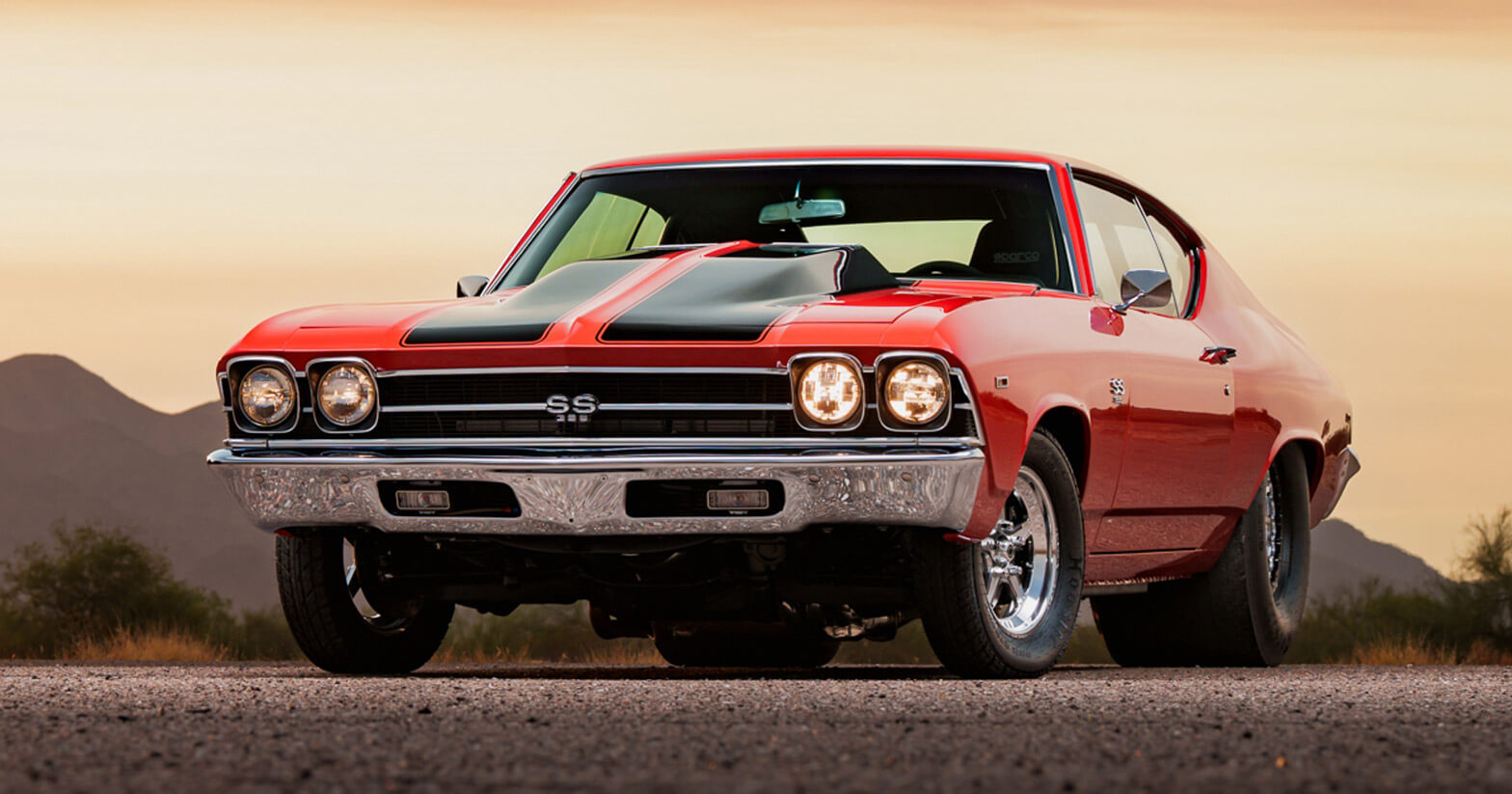
1969 Chevy Chevelle Specs
Last Updated April 1, 2026The 1969 Chevy Chevelle brought aggressive new styling and functional upgrades that made it one of the most recognizable and versatile muscle cars of its era. Serving as a bridge between the refinement of the early models and the peak horsepower offerings of 1970, the '69 Chevelle blended bold looks with strong performance that makes it a popular choice for classic car builders today.
Technical Specifications Overview
| Category | Details |
|---|---|
| Model Year | 1969 (Second generation, face-lifted) |
| Engine Options |
230ci Inline-6 (140 hp) 250ci Inline-6 (155 hp) 307ci V8 (200 hp) 327ci V8 (235-275 hp) 350ci V8 (255-300 hp) 396ci V8 (325-375 hp, SS 396) |
| Transmission Options | 3-speed manual, 4-speed manual, 2-speed Powerglide auto, 3-speed Turbo Hydra-Matic |
| Horsepower Range | 140 hp - 375 hp |
| Suspension | Independent front suspension, 4-link rear with coil springs |
| Brakes | Drum brakes standard; power front disc brakes optional |
| Performance Package | SS 396 (Z25), available with 325, 350, or 375 hp engine |
| Wheelbase | 112 inches (coupe) |
| Weight | Approximately 3,300 - 3,700 lbs depending on configuration |
New Features for the 1969 Model Year
The 1969 Chevelle received a number of visual and mechanical updates that set it apart from the previous year. With revised styling cues and several refinements in comfort and safety, the '69 model offered more presence and versatility for performance-minded buyers.
Exterior Design
For 1969, Chevy gave the Chevelle a more aggressive look with a redesigned front end that featured a revised grille, more prominent quad headlights, and a reshaped bumper. The body sides were subtly resculpted with creased body lines that sharpened the car's profile.

At the rear, new dual taillight bezels replaced the wraparound lights of previous years. SS 396 models were distinguished by a domed hood, blacked-out grille, and unique badging. New wheel options and bright trim accents added variety to the lineup, further enhancing its curb appeal.

Interior Updates
Inside the cabin, the 1969 Chevelle introduced an updated dash design with a more modern instrument cluster and better-integrated controls. The steering column was redesigned to incorporate an ignition switch in compliance with new safety regulations, and headrests became standard equipment. Optional bucket seats and center console configurations remained popular, particularly in Super Sport models. The interior continued to balance sportiness with comfort, offering a straightforward layout that appealed to a wide audience.

Performance Enhancements
Performance-wise, the 1969 Chevelle kept the winning formula from 1968 but refined it with additional options and smoother drivability. The SS 396 remained the top dog for street performance, and buyers could select from three power output levels of the 396ci V8. While the 454ci big-block was still a year away, the '69 model benefitted from chassis improvements, including upgraded bushings and suspension geometry for improved ride quality and cornering. Power front disc brakes and performance axle ratios could be added to tailor the car to more aggressive driving styles.

Why Enthusiasts Love the 1969 Chevelle
The 1969 Chevelle strikes a perfect balance between classic styling and usable performance. For restorers and collectors, it offers standout looks, proven drivetrain options, and excellent parts availability. The factory styling updates give it a bolder presence than earlier models, and the continued availability of big-block V8 power makes it a serious contender on the street or strip. Whether you're restoring an SS 396 or building a modernized restomod, the '69 Chevelle offers an ideal platform with both historical significance and real-world performance potential.


