
1970 Chevy Camaro Specs and Overview
Last Updated October 14, 2025The 1970 Chevy Camaro marked the beginning of the second generation, featuring a complete redesign and more refined performance. With sleeker styling, wider dimensions, and an upgraded suspension layout, the '70 Camaro was a bold step forward from the first-gen cars. This article breaks down the technical specs, year-specific changes, and explains why the 1970 Camaro continues to be a favorite among classic muscle car fans and builders.

1970 Chevy Camaro Specs and Technical Overview
| Category | Details |
|---|---|
| Model Year | 1970 (Second-generation debut) |
| Engine Options |
250ci Inline-6 (155 hp) 307ci V8 (200 hp) 350ci V8 (250-360 hp) 396ci V8 (350 hp) 402ci V8 (optional, badged as 396) 454ci V8 (LS6, dealer swaps only) |
| Transmission Options | 3-speed manual, 4-speed manual, 2-speed Powerglide auto, 3-speed Turbo Hydra-Matic |
| Horsepower Range | 155 hp - 360 hp (factory rated) |
| Suspension | Independent front with coil springs, rear leaf springs with staggered shocks |
| Brakes | Front disc, rear drum (power brakes optional) |
| Performance Packages | Z28, RS, SS |
| Wheelbase | 108 inches |
| Weight | Approximately 3,400 - 3,700 lbs depending on configuration |
New Features for the 1970 Model Year
The 1970 model year introduced a completely new platform for the Camaro. With European-inspired styling and mechanical upgrades across the board, this second-generation launch gave the car a more refined and performance-focused identity. Below is a breakdown of what changed in its first year of this new generation.
Exterior Design
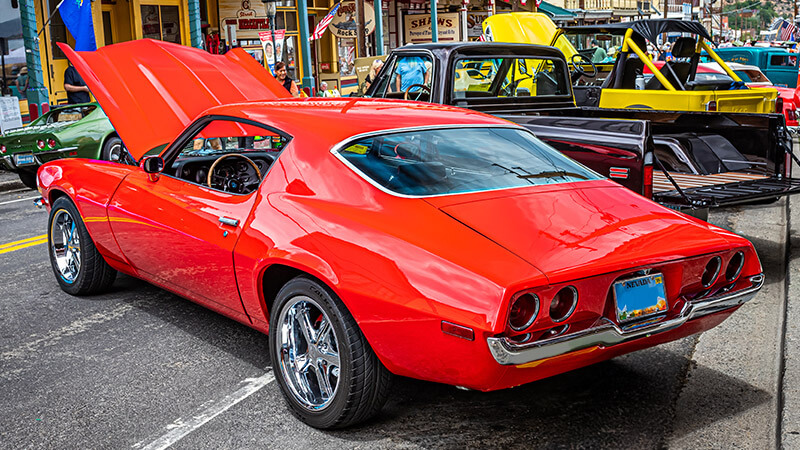
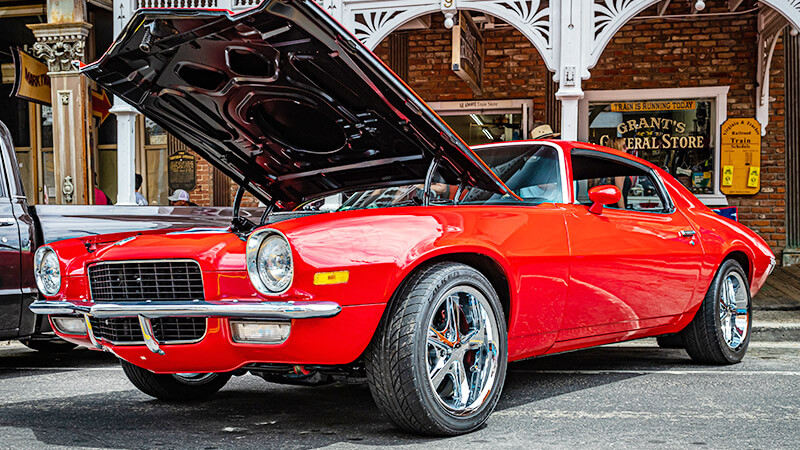
The 1970 Camaro featured an all-new body design with more fluid, curvaceous lines that departed sharply from the boxy look of the first-gen cars. A long hood, fastback-style roofline, and wide rear quarters gave it a more aggressive stance. The new grille and deeply recessed headlights gave the front end a cleaner, more modern appearance.
Rally Sport (RS) models included unique split-bumper styling, hidden turn signals, and chrome accents. The updated body was also longer and wider, which helped improve stability and gave the car a more substantial road presence.
Interior Updates
Inside, the cabin was redesigned with improved materials, a lower seating position, and a wraparound dashboard that gave the driver a more cockpit-like feel. High-back bucket seats became standard, adding comfort and head support. The gauge cluster was upgraded with round, easy-to-read dials, and the overall ergonomics were a noticeable improvement over the outgoing model. Deluxe trim packages included woodgrain accents and upgraded vinyl surfaces for a more upscale feel.
Performance Enhancements
The 1970 Camaro featured a revised suspension system that helped improve cornering and ride quality. The use of staggered rear shocks (mounted on opposite sides of the axle) helped reduce wheel hop during hard acceleration, especially in high-horsepower models. The Z28 returned with a high-performance 350ci LT-1 V8 rated at 360 horsepower, solid lifters, and a 780 cfm Holley carburetor. It was one of the most well-rounded factory performance packages of its time. SS models could be equipped with a 396ci (actually 402ci) big block for extra torque and muscle.
Why Enthusiasts Love the 1970 Camaro
The 1970 Camaro represents the sweet spot between performance and style. Its new chassis and body were purpose-built for the muscle car era, yet they laid the groundwork for future refinement and drivability. The Z28's LT-1 engine made it one of the most potent small block cars of the decade, while SS models with big block power delivered pure street domination. Collectors love the 1970 model because it was a one-year-only design before government regulations and insurance concerns started changing the market. For restorers, it's a rewarding platform with wide aftermarket support and unmistakable character.