1971 Chevy Camaro Specs and Overview
Last Updated October 17, 2025The 1971 Chevy Camaro carried over the sleek second-generation design introduced the previous year, but it faced new challenges due to tightening emissions regulations and rising insurance costs. While power ratings dropped slightly, the Camaro still offered serious performance and styling that made it one of the most desirable pony cars of the early 1970s. This article covers the specs, new features, and why enthusiasts continue to appreciate the 1971 model.

| Category | Details |
|---|---|
| Model Year | 1971 (Second-generation continuation) |
| Engine Options |
250ci Inline-6 (145 hp) 307ci V8 (200 hp) 350ci V8 (245-330 hp) 396ci V8 (300 hp, SS only) |
| Transmission Options | 3-speed manual, 4-speed manual, 3-speed Turbo Hydra-Matic automatic |
| Horsepower Range | 145 hp - 330 hp (gross rating) |
| Suspension | Independent front, rear leaf spring with staggered shocks |
| Brakes | Front disc, rear drum |
| Performance Packages | Z28, RS, SS |
| Wheelbase | 108 inches |
| Weight | Approximately 3,300 - 3,700 lbs depending on configuration |
New Features for the 1971 Model Year
While visually very similar to the 1970 model, the 1971 Camaro saw key updates to meet changing federal regulations and market conditions. These changes affected engine performance, trim details, and available options.
Exterior Design
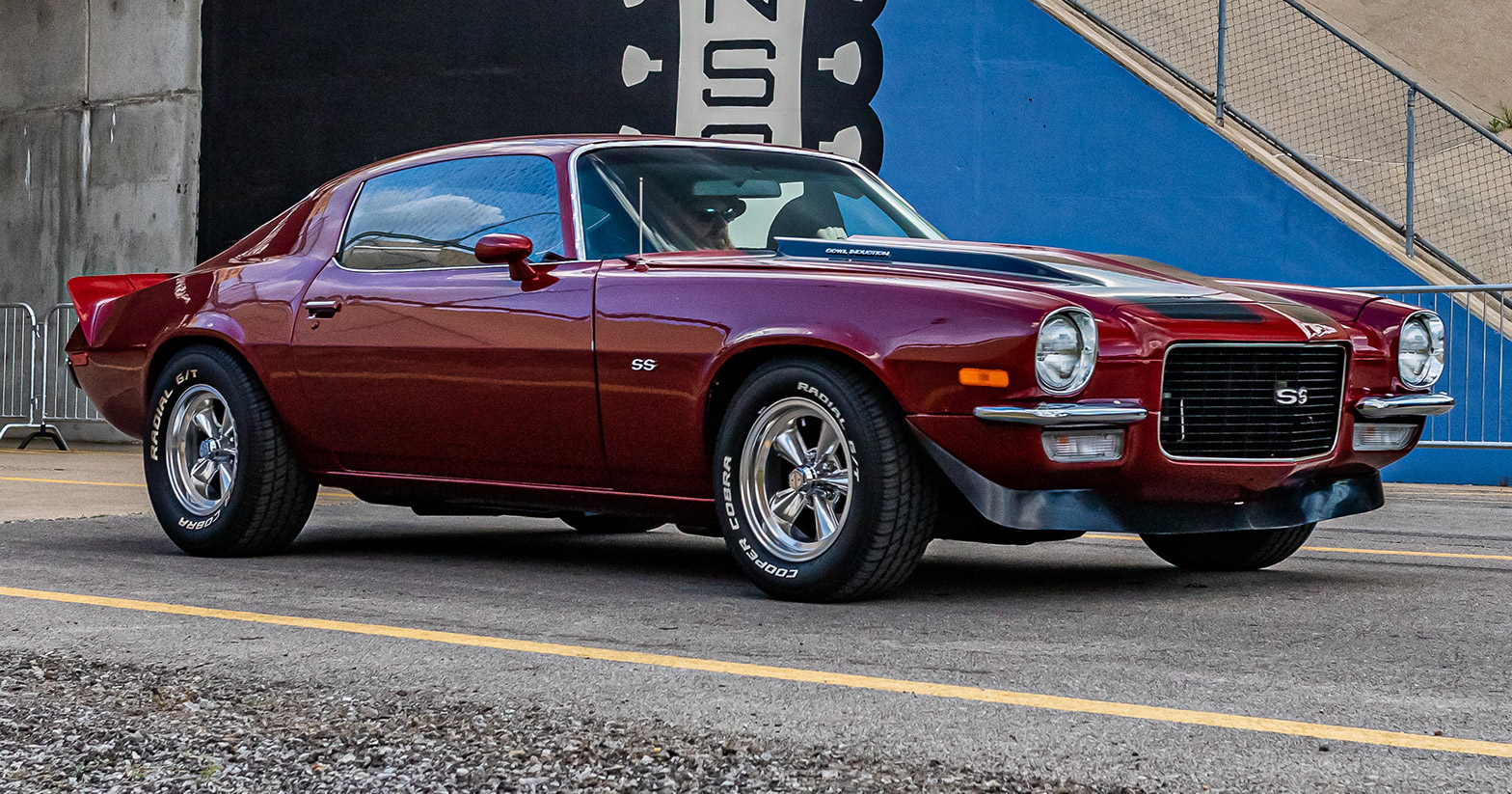
The exterior styling remained largely unchanged, continuing the long-hood, short-deck fastback profile that defined the second-generation Camaro. Split bumper Rally Sport models remained available, featuring chrome bumperettes and a distinctive grille.

A new egg-crate style grille design was introduced across all models. Minor updates to badging and trim helped distinguish the 1971 from its predecessor, though most visual cues were subtle.

Interior Updates
The 1971 interior maintained the wraparound dashboard and low-slung driving position introduced in 1970. High-back bucket seats were still standard, and buyers could choose optional upgrades like woodgrain dash accents and center consoles. One notable addition was the new seatbelt warning system, which reflected growing federal safety requirements. Instrumentation and control layouts remained familiar and driver-focused.

Performance Changes
Due to tightening emissions and the use of lower-octane fuel, Chevy reduced compression ratios across the engine lineup. This led to modest drops in horsepower ratings, especially in high-performance trims like the Z28 and SS.

The Z28 now used a 350ci LT-1 small block rated at 330 hp, down from 360 in 1970. The SS 396 also saw a reduction to 300 hp. Despite the changes, these cars still delivered impressive real-world performance thanks to their power-to-weight ratios and aggressive gearing.

Why Enthusiasts Love the 1971 Camaro
The 1971 Camaro offers a nearly identical driving experience to the 1970 model but at a generally more affordable price on today's collector market. With its aggressive styling, strong chassis, and legendary small and big block engine options, it remains a favorite for both restoration and restomod projects. Many enthusiasts consider the 1971 Camaro the last of the “pure” second-gen models before deeper emissions controls and federal mandates began reshaping the muscle car landscape.