
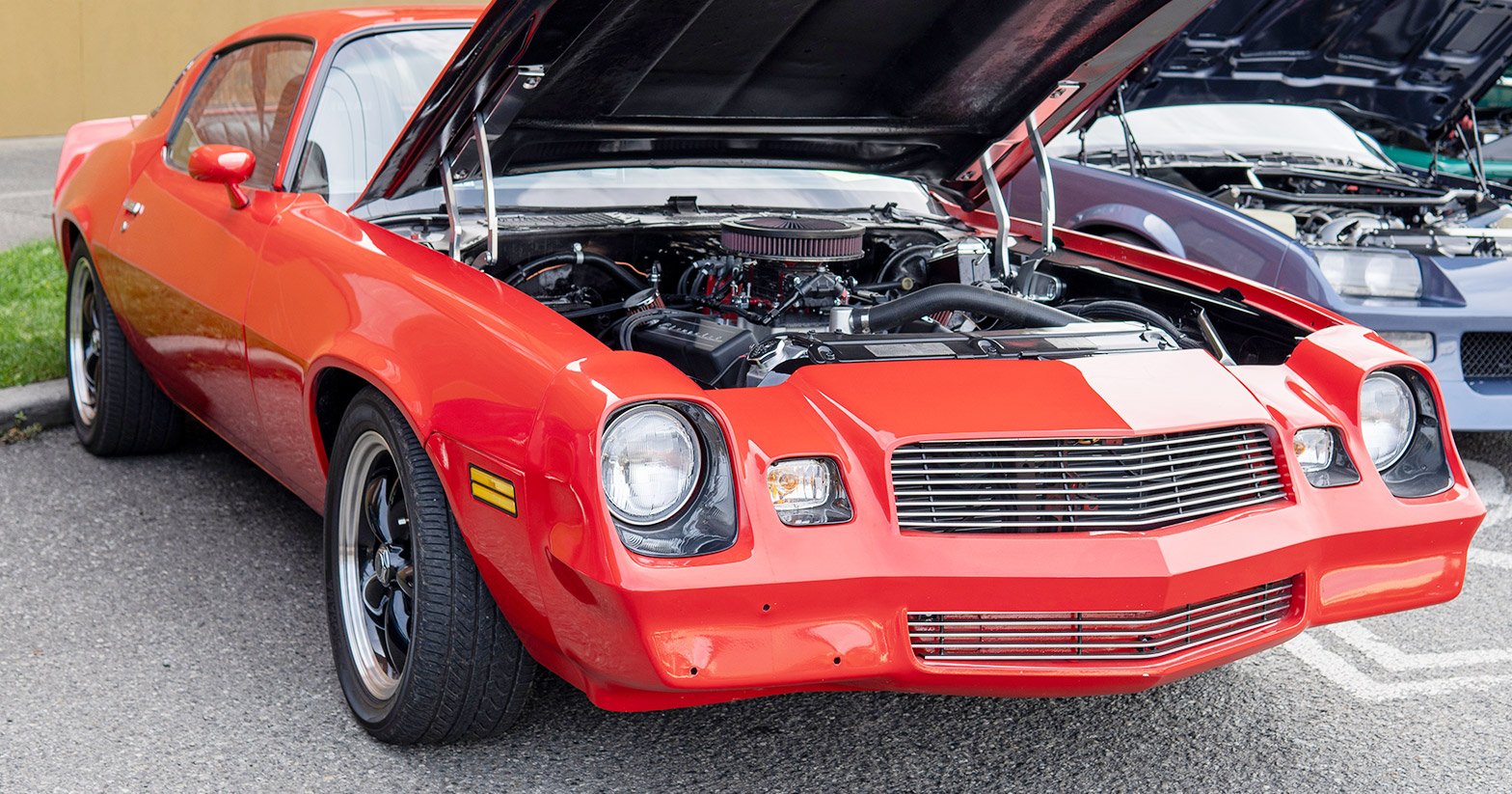
Chevy 305 Engine Specs
Last Updated March 31, 2026The Chevy 305 small block V8 was introduced in the mid 1970s as a fuel efficient alternative to earlier high compression performance engines. While not as powerful as its 327 or 350 predecessors, the 305 became widespread in GM cars and remains a common engine found in late 1970s Camaros, Malibus, and full size Chevys. This guide explores the specs, history, strengths, weaknesses, and swap potential of the 305 for classic Chevy owners.

| Specification | Details |
|---|---|
| Displacement | 305 cubic inches |
| Bore x Stroke | 3.736 in x 3.48 in |
| Production Years | 1976 to 1998 |
| Factory Horsepower | 130 to 160 hp (late 1970s versions) |
| Compression Ratio | Approximately 8.0 to 9.5:1 depending on year |
| Notable Applications | Late 1970s Camaro, Malibu, and full size Chevrolet cars |
History of the 305 Small Block
By the mid 1970s, tightening emissions regulations and rising fuel economy standards pushed Chevrolet to engineer smaller, more efficient engines. The 305 was built as a response to that shift. It shared much of its architecture with earlier small blocks but reduced bore size to meet economy goals.
Unlike the 327 and 350, which were created for performance, the 305 was designed for reliability and efficiency. As a result, many versions came with low compression, mild cam profiles, and restrictive factory cylinder heads that limited airflow and horsepower.
While not a muscle era powerhouse, the 305 played a major role in keeping V8 engines alive during an era where most manufacturers were abandoning performance entirely.
305 Small Block Performance Characteristics
The 305 delivers adequate torque for everyday driving but is not known for high output potential. The small bore size limits the size and efficiency of cylinder heads that can be used, which in turn restricts top end power. Despite this, the engine can be tuned for modest gains through bolt on upgrades.
Strengths
- Widely available and inexpensive compared to other small blocks
- Good for cruiser builds and daily driver classics
- Shares many parts with 350 and 307 engines
- Fuel efficient for its time
Weaknesses
- Small bore limits cylinder head flow and power potential
- Not ideal for high horsepower builds
- Aftermarket performance support is weaker than 327, 350, or 400 engines
Is the 305 a Good Swap Candidate?
For most builds, the 305 is not the first choice for a performance oriented swap. The 350 offers significantly better performance potential and similar cost. However, the 305 can still be useful depending on your goals.

Best Uses for a 305 Swap
- Budget cruiser builds
- Restoring a late 1970s Camaro or Malibu with its original style drivetrain
- Mild street upgrades without requiring high horsepower
When to Choose a Different Engine
- If your goal is strong performance or future power upgrades
- If you want a deep aftermarket parts catalog
- If you are building a restomod or track capable car
Enthusiasts generally prefer the 350 for performance, the 327 for classic character, or the 400 for torque heavy builds.
Factory Models Equipped with the 305
Chevy installed the 305 in many models during the late 1970s and 1980s:
- 1977 to 1979 Camaro
- 1978 to 1979 Malibu
- Late 1970s Impala and Caprice models
- Various early 1980s GM mid size cars
Should You Build a 305?
The 305 is a solid and reliable small block that works well for mild street cars and budget projects. While not a powerhouse, it offers smooth drivability and low entry cost. If you want to stay period correct with a late 1970s GM build, the 305 might be the right choice.
For high horsepower goals or more serious performance, upgrading to a 350, 383 stroker, or 400 based build will offer far better results with only a small increase in cost.


